
When I was 26, I stood on a big stage for the first time, with around 500 people below me. I still remember the light shining straight into my face, the sound of the microphone in the hall, and the feeling of being both overwhelmed and excited as I looked down at all those eyes waiting for me to say something that could inspire them. When my talk ended, the whole room applauded loudly. Then people came up to me, congratulated me, and wanted to hear more. I truly liked that feeling. The feeling of being seen, being admired, being recognized, as if everything I had worked for was finally being confirmed in front of everyone.
But after enough moments like that, the applause, the praise, and the feeling of victory began to repeat themselves. Only then did I slowly realize that something inside me no longer felt the same. After those moments in front of the crowd, I started to move to a corner and sit by myself. When the noise faded, a strange silence appeared inside me.
It was not sadness exactly. It was not disappointment either. From the outside, nothing was wrong. The talk had gone well. People were kind. The applause was real.
But something in me remained untouched.
I was being recognized more, but I felt less known. For a long time, I thought being seen meant becoming someone people could admire. In the world I came from, that belief made sense. I had learned early that people look differently at those who have less, and I did not want to carry that old gaze for the rest of my life.
And for a while, it worked. Praise reached a part of me that had been hungry for years. Each milestone gave me a short relief, as if I was finally becoming someone worthy of being seen. Because that feeling only came when I achieved something, I slowly learned to keep achieving in order to keep feeling seen. But the more I was seen through achievement, the more I abandoned the parts of me that had nothing to prove.
I did not know it then, but the kind of seeing I was hungry for would not come from a bigger stage. It would come later, in a much quieter room, when I stopped trying to be impressive and let the hidden parts of me be seen.
That was when I began to understand: there are two ways to be seen. One makes you perform more. The other lets you come home.
I Thought Being Seen Meant Being Admired
Before I ever stood on a stage, I had already learned another kind of being seen. I grew up with the feeling that my family was different from other families, and that difference was not something I knew how to carry easily as a child. There was illness, poverty, and a heaviness in my home that I did not see in the homes of other children. Very early, I learned to notice what could be looked at, what might be laughed at, and what I should quietly hide. When your living conditions are worse than other people’s, you are not only easier to overlook. You also begin to learn how to make yourself smaller.
There is one memory from elementary school that has stayed with me very clearly. One time, my teacher asked in front of the class whether any student belonged to a poor household so that the school could offer support. I remember my classmates laughing and teasing. I knew my family needed that support, but I did not dare raise my hand. In that moment, what frightened me was not only the fact of being seen as poor, but the feeling that if I raised my hand, I would be seen as a person with less value. Looking back, I see that this was not just a sad childhood memory. It was one of the first moments I learned that being seen could also make me feel smaller. What stayed with me was not only the shame of being poor, but how early I learned to see myself through that same gaze.
In that world, I slowly absorbed a belief that felt natural: if I wanted to hold my head high, I had to rise above. I did not want my family to be seen with pity or disrespect. So achievement became more than success. It became the way I tried to be seen without feeling ashamed.
Achievement Gave Me Recognition, But Pulled Me Away From Myself
Achievement did not feel empty at first. It began with things that were real.
In 2022, my family built a new house. The old house I had lived in since I was born had become too old to hold us well, and I wanted my mother to have a decent place to live — a place I could also return to.
For many people around me, building a house was not unusual. But for my family, it felt almost impossible. We had been one of the families no one expected to rise quickly. And then, almost suddenly, we built one. A beautiful one.
I could feel the gaze around us change. People began to look at my family differently. And they began to look at me differently too. I was no longer only the quiet, hesitant boy they used to know. I was still the same person on the outside, still ordinary in many ways, but something about how people saw me had changed. It was as if they could now sense a different weight inside me: this quiet kid had actually done something. He had made money. He had built a house for his family. His family no longer had to live the same hard way anymore.
And I cannot pretend that this recognition did nothing for me. People began to treat my words differently. They asked for my advice, invited me to speak, wanted to work with me, and listened to me in ways they had not before. Even inside my family, my opinion carried more weight.
Something in me opened too. I became less shy, more willing to speak, and less afraid of being wrong. Recognition did not only change how people saw me. It changed how I moved through the world.
I do not want to make achievement the enemy here. It was not. Money helped my family breathe. Recognition gave me confidence. Success opened doors that had once felt closed. These things were real, and I am grateful for them. The problem began when I stopped treating them as things that supported my life, and started treating them as things that defined who I was.
The shift was subtle. The things that began from real needs slowly hardened into symbols of who I was. The person who could build a house. The person who could travel the world. The person who invested in expensive courses and lived boldly. At first, these things came from life. Later, they became an image I felt I had to keep feeding.
Slowly, I stopped asking what I truly wanted and started asking what this image required from me.
It usually came at night, after the day had already given me enough proof that I was still moving forward. Everything looked fine on the surface.
But when the evening became quiet and there was no one around to reflect me back to myself, something hollow started to appear. I would reach for my phone, looking for someone to call or somewhere to go. Not because I truly wanted anything in particular, but because being with someone felt easier than being alone with that emptiness.
I was not looking for a deep answer then. I just wanted to feel, for a moment, that I was still seen.
That was the emptiness underneath the image. The sadness, the loneliness, the fear, the tired parts of me — none of them fit the life I had learned to perform. So I moved faster, chasing the next moment that could make me feel visible again.
Achievement had given me recognition. But it was also pulling me away from the parts of myself that most needed to be seen.
The First Time I Was Seen Without Performing
For years, those parts had nowhere to go. I kept them hidden even from the people closest to me. I believed they were too shameful to say out loud, and that if people saw them, they would laugh, judge me, or look at me differently. The more visible the outside of my life became, the farther these hidden parts fell behind.
Until one day when I was 25, after an intensive program, a small group of us stayed behind after class. The teacher said each person could share something they had never told anyone before. No one was forced. Whoever was ready could speak. The rest of us would only listen — no questions, no advice.
That rule mattered. It meant I would not have to explain myself, defend myself, or make my pain easier for other people to understand.
At that point, something in me had already begun to move, but I was still not fully ready. There were still too many people in the room, and the things I was carrying felt too private, too shameful, too exposed. But after the first few people shared their hidden stories, I saw the relief on their faces. They looked as if they had finally been released from something they had carried for years. Watching them, I felt as if I had received an invitation. Something in me started pushing forward. If not now, I thought, when?
So I raised my hand before I could talk myself out of it.
I did not think anymore. There was no script, no preparation, no careful way to make the story sound acceptable. Once I began, it just came out. I spoke about my father, about poverty, about the shame I had carried around my family, and about the hurt I had never known how to put into words. I cried as I spoke. And after I finished, when the room became quiet, I cried even harder. It felt as if something underground in me had finally opened, and all the water I had held back for years began to move.
For the first time, I had risked letting other people see the parts of me I had believed were too shameful to be seen. I thought they would laugh, judge me, or look at me differently. But they did not. They stayed. They listened.
That was the first time I was seen without performing. Not because I had achieved something. Not because I had become impressive. But because I had stopped hiding.
Afterward, a few people told me they felt closer to me. They respected my honesty and courage. Something old in me cracked: maybe if people saw the weak, ashamed, wounded parts of me, they would not necessarily reject me. Maybe they could even love me more honestly.
After that day, I felt as if I had been born again. Not because the wounds disappeared. They were still there. But they no longer had to live underground. They could exist beside my achievements, beside recognition, beside the strong parts of me.
Something in me realized: I did not have to perform my way into being seen.
But I did not know how to live from that realization yet. I had seen another possibility, but it would take years, another country, and a quieter life for that possibility to become a practice.
Truth Made Me Visible to Myself
Being seen by others had opened something in me. But it also revealed something uncomfortable: for years, I had not only hidden those parts from other people. I had hidden them from myself.
When I came to America, the version of me that people recognized back home did not come with me. No one knew the stages I had stood on, the things I had built, or the person others used to ask for advice. I was simply another student in a new country, trying to understand English, trying to express myself, trying to find my place among strangers.
I still remember sitting in English class while the teacher was speaking and the other students were discussing around me. I could barely follow what was happening. When people laughed, I did not know what they were laughing about. During the break, when everyone gathered and talked, I did not know where to stand, where to sit, or how to begin a conversation. I felt so awkward that I wanted to disappear.
In those moments, the old small part of me returned very clearly — the shy, hesitant part that did not feel good enough and did not know how to speak. The confident Nam who could stand on a stage, inspire a room, and be admired by others seemed to have vanished.
I did not move through that period easily. Every day, I still tried to hold myself together, to look like I understood, to look like I was keeping up, to look like I was not lost. But slowly, I began to realize something: no one here was asking me to be the version of myself I had been back home. No one expected me to be impressive. No one needed me to perform the old image.
That was uncomfortable, but it was also strangely freeing. If no one knew the image, I did not have to protect it. I did not have to introduce myself through what I had achieved. In fact, the few times I tried to bring that old image forward, I could feel it creating more distance than closeness.
So I started again, almost like a child: learning the language, learning how to speak, learning how to build relationships from the beginning. I let myself be awkward, shy, unsure, sometimes lonely. I did not have to escape those feelings immediately. I could stay with them. And the more I allowed myself to stay, the more I began to hear what was actually true in me.
That was when I began to notice the small truths inside me more clearly. I wanted to connect with new friends, so I let myself sit closer before I knew what to say. I wanted to understand the culture around me, so I joined the trips, the meals, and the small moments of being together, even when I could not follow every conversation. In class, when something touched a real place in me, I let myself speak before my thoughts were fully clear and before my English felt ready.
None of this was because I wanted to stand out. It was because I wanted to live more honestly with what was moving inside me, before fear, shame, or the need to look good covered it again.
Over time, that practice led me to a larger question: if I did not have to choose for money, approval, status, or anyone else’s expectation, what would I actually want to give the next five or ten years of my life to?
I sat with that question for a long time. There were more practical paths I could have followed, especially while living in San Francisco, where everyone seemed to be talking about AI, startups, and the future. But something in me kept turning toward a quieter direction. I chose East-West Psychology at CIIS not because it was impressive, not because it would make money right away, and not because it could prove anything to anyone. I chose it because I genuinely wanted to understand myself, psychology, and human beings more deeply.
The point is not what I chose. The point is where the choice came from.
During my first semester, I remember one in-person class where the teacher gave our group an open-ended exercise. There was no fixed script. We could respond in whatever way felt natural.
For some reason, something in me wanted to dance.
I did not know how to dance. The whole class was there. People could see me. For a few seconds, I felt the old hesitation rise again: What if I look strange? What if I do it badly?
But this time, I did not let that fear decide for me. I closed my eyes and listened to what was moving in my body. Then I started to move with the music. Not beautifully. Not confidently. Just honestly.
I did not dance because I knew I would look good. I danced because, in that moment, dancing was true.
It was a small moment, but I could feel what had happened: I had followed something real before fear turned it into performance.
And that was not the only time. Throughout the semester, I kept practicing this in small ways: speaking when my thoughts were not fully clear, asking when I did not understand, and noticing my shame, fear, and confusion without rushing to reject them. Slowly, I began to see it: each time I followed something true, even in a small way, I became a little more visible to myself.
By the final class of the semester, in Psychology of Death and Dying, I remember feeling surprised by how quickly time had passed. It felt like I had just walked into that classroom for the first time, barely understanding what was happening around me. And yet, something in me knew it had been enough.
I had lived inside the time of that class fully. I had spoken enough, received enough, and worked with myself seriously. Not superficially. Not like a machine trying to optimize everything. But like a person willing to be touched by what he was learning.
There was no applause. No milestone. No one praising me. But inside my chest, I felt full. It was a quiet fullness, cool and light, filled with a kind of satisfaction I knew well, but in a different form. It felt almost like being recognized — except this time, the recognition was coming from within.
I was not celebrating a victory. I was not proving anything. I was simply seeing myself, staying with myself, and recognizing the parts of me I used to leave behind.
Something else was beginning to return too: energy. Not the loud energy of achievement or applause, but a quieter aliveness that came from not abandoning what was true in me.
Fear Did Not Disappear, But Energy Returned
The energy did not return because I became fearless. It returned because I stopped using so much of myself to hide from fear.
The fear was still there. It still appeared when I wanted to approach someone new, when I had to speak in class, when I sat in a conversation and could not follow everything being said. A part of me still wanted to shrink, to disappear, to protect myself from being seen as not enough.
But now I could name it more clearly. I could say to myself, I am feeling shy right now. I am afraid I will not speak well. I am worried I might act awkwardly. I feel anxious because my English still feels limited.
Sometimes I named it out loud to the person in front of me. I remember moments in conversation when English was moving too fast and I could feel myself pretending to understand. Before, I would have nodded, smiled, and tried to hide the panic. But now I could say, “I’m losing the thread a little. Can you say that again?” The moment I said it, something in my body softened. The conversation did not collapse. It simply continued.
Then I had more room to be in the moment itself. Instead of spending all my attention worrying about what might happen, I could listen more freely, speak more naturally, and return to what was actually happening.
Over time, that small shift began to change the way I moved through life. The energy I had used to protect myself became available for something else: staying in a conversation, speaking before my thoughts were perfect, learning the language more patiently, and following what felt alive. I was no longer only organizing myself around avoiding fear. I was beginning to move toward what felt alive.
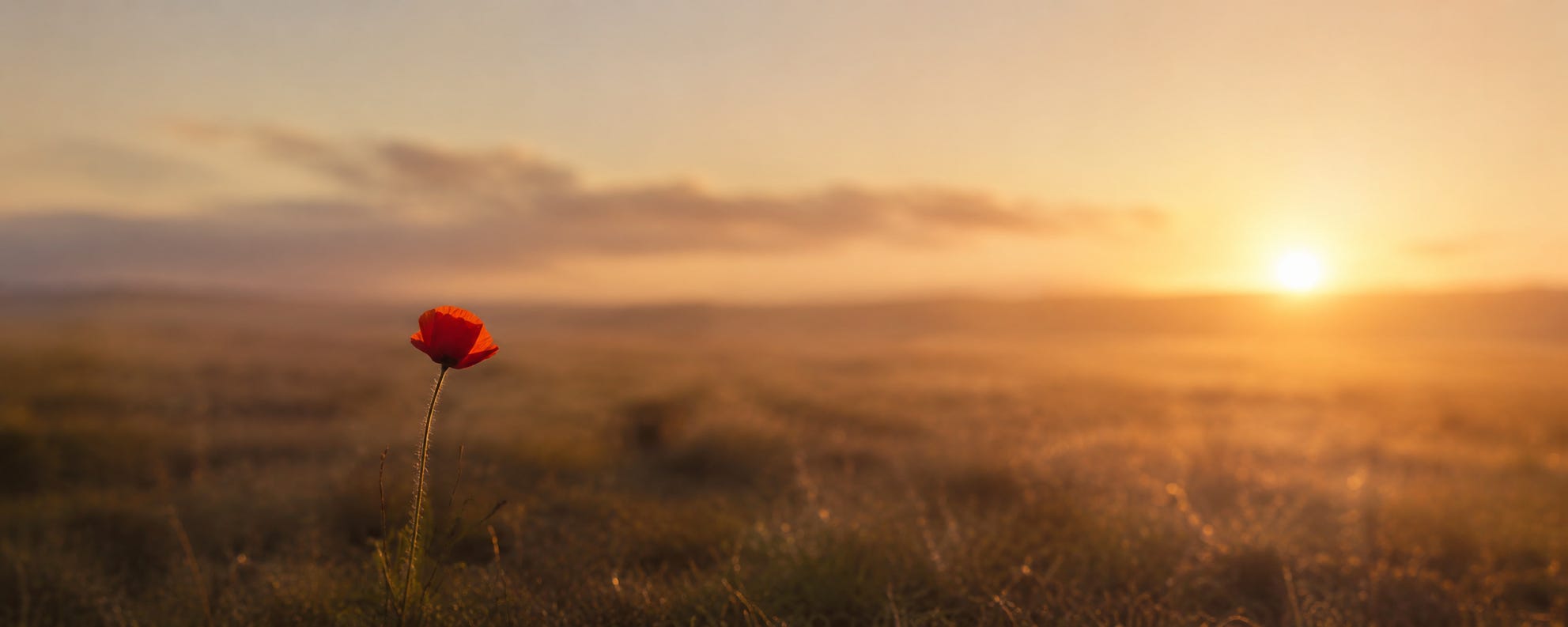
That was when the image of a flower began to make sense to me.
The Flower Does Not Bloom to Be Admired
The flower does not ask whether it is safe to bloom. It blooms because it is alive.
It does not wait for a world without danger. It does not wait until its roots are guaranteed to hold, until the wind promises not to break it, or until the sun promises not to burn it. It can still be broken. It can still be burned. It can still bloom for one brief moment and be gone tomorrow.
But today, it still turns toward life. This is not recklessness or pretending danger does not exist. It is simply life moving in the direction it was meant to move.
For a long time, my old way of shining needed an audience. I wanted to become someone people could admire, someone whose life proved that I was no longer small, ashamed, or easy to overlook. But the flower showed me another kind of radiance. It does not bloom to prove that it is worthy. It blooms because blooming is what happens when life is no longer held back.
I still want to be seen.
I do not think that desire is wrong anymore. The need to be seen, heard, and recognized is real. But I no longer want to be seen only through what I can achieve, explain, or make impressive. I want to be seen in the parts of me that are still afraid, still tender, still awkward, still becoming.
And maybe more importantly, I want to see those parts myself.
I want to notice the fear without immediately turning it into a project. I want to notice the shame without dressing it up to look beautiful. I want to notice the life moving in me before vanity, performance, or the need for approval covers it again.
Maybe a radiant life is not a life without fear. Maybe it is a life that no longer abandons what is true inside in order to be loved.
I used to think living brightly meant becoming someone worth admiring. Now I am beginning to see it differently.
A flower does not bloom to be seen. It blooms because it is alive.
- Nam